What Powersports Dealerships Get Wrong About Multi Brand Marketing
Multi-brand powersports dealerships occupy a unique position in the market. On paper, carrying several manufacturers should be a massive advantage: more inventory to appeal to more riders, more price points, more riding styles under one roof, and more reasons for customers to walk through the door. In practice, many multi-brand dealers struggle to translate that advantage into marketing results. The showroom floor may be full of variety, but the marketing message is often scattered, diluted, or contradictory. The result is a brand identity that confuses shoppers rather than converting them.
At Moto Marketing, we work exclusively with motorcycle and powersports dealerships across the United States and Canada, and we have seen the same multi-brand marketing mistakes repeat themselves across stores of every size. This article breaks down the most common errors, explains why they undermine sales and loyalty, and outlines what a stronger approach looks like. If your dealership carries more than one OEM franchise, these insights are worth a close review.
The Core Problem: Treating Multi-Brand Like Single-Brand Marketing, Just Louder
The most fundamental mistake multi-brand dealers make is assuming that multi-brand marketing is simply single-brand marketing with more logos attached. It is not. A single-brand dealer benefits from a unified identity: every campaign, every social post, and every event reinforces one manufacturer's story and one community's passion. A multi-brand dealer must build a coherent identity of its own while still honoring the individual personalities of each brand it carries.
When dealers fail to make that distinction, marketing becomes a tug-of-war. Campaigns compete for the same homepage real estate. Emails promote three unrelated offers in one message. Social feeds alternate between brand voices with no connective tissue. The customer experience feels inconsistent, and inconsistency erodes trust. Shoppers begin to wonder what the dealership actually stands for, and that hesitation is expensive in a market where buyers have more information and more options than ever before.
Mistake One: No Unified Dealer Brand Beneath the Manufacturer Brands
Many multi-brand dealerships operate as passive hosts. They let each manufacturer's branding dominate the website, signage, and advertising, and the dealership's own name becomes an afterthought. The problem is that manufacturer marketing is designed to sell the brand, not your store. If a customer's entire relationship is with the OEM logo, they have little reason to stay loyal to you when a competing dealer carries the same badge.
A strong dealer brand acts as the umbrella that gives every franchise a home. It answers questions like: What kind of riding community do we serve? What is our service reputation? Why do riders trust us with their purchase and their maintenance? When that identity is clear, the manufacturer brands become chapters in your story rather than competing stories of their own. This is a foundational element of the marketing strategy and tactics we build for multi-brand clients, and it changes how every downstream campaign performs.
- Does your website communicate a clear dealership identity independent of any single OEM logo?
- Can a customer describe what makes your store different without naming a manufacturer?
- Do your staff and your marketing speak in one consistent voice across every brand you carry?
If the answer to those questions is no or "not really," your marketing is doing the manufacturers' work instead of your own. That is a strategic gap worth closing before any tactical spend increases.
Mistake Two: Fighting an Internal Battle for Attention
In many multi-brand stores, each franchise manager wants their brand featured prominently, and marketing becomes a political exercise in balancing visibility. The homepage banner rotates between brands. Social media posts alternate by quota. Email newsletters become crowded summaries of every department's latest promotion. From the dealership's perspective, this feels fair. From the customer's perspective, it feels noisy and unfocused.
The right way to think about brand representation is through the lens of customer relevance, not internal fairness. A street rider browsing your site should see the street inventory and content that match their intent. An off-road family should see ATV and UTV pathways. A track-focused enthusiast should land in a community that speaks to them. That does not mean hiding your other franchises; it means structuring your marketing so each audience finds a clear entry point.
Segmentation solves the fairness problem better than rotation does. When your email and SMS marketing is segmented by riding interest, each brand gets dedicated, undiluted attention in front of the people who actually care about it. Nobody has to fight over a shared banner, and the customer never receives a message that feels like a committee compromise.
Mistake Three: A Website That Sorts Inventory but Not Intent
Most multi-brand dealership websites are organized like warehouses: model year, make, category, price. That structure serves inventory management, not shopping behavior. Real riders do not browse by database field. They browse by identity and intent: "I want a first dirt bike for my kid," "I want a cruiser for weekend trips," "I need a side-by-side for hunting season," "I want to move from a 300 to a 600."
When the digital experience ignores intent, shoppers bounce between sections, get overwhelmed, and leave. The winners in multi-brand marketing design customer journeys around riding intent first and inventory second. That means:
- Landing pages built around riding use cases and buyer stages, not just model lines.
- Clear pathways for new riders, returning riders, and upgrading riders.
- Content that educates before it sells, such as buying guides and category comparisons.
- Consistent local signals so nearby shoppers can find the store that serves their intent.
This is where local market analysis matters. A multi-brand store in a region where off-road riding dominates should not lead with the same messaging as a store in a metro market full of commuters and street riders. The inventory mix may be similar, but the intent of the local audience is not.
Mistake Four: Brand Loyalty Programs That Ignore Brand Communities
Riders are tribal. They identify with their brand communities, their local clubs, their riding style, and the events that bring those groups together. Multi-brand dealers often flatten all of this into generic "customer appreciation" messaging, which lands with none of the emotional weight that brand-specific content carries.
The better approach is to build marketing around the communities that already exist and intersect with your store. A multi-brand dealer can host events that honor each community separately: a dirt-focused weekend, a street-focused demo day, a UTV-focused family event, a women's riding clinic. Riders get to gather around the identity that matters to them, and your dealership becomes the venue that makes it possible.
Our work with dealership events shows that multi-brand dealers who segment their event calendar by community consistently see stronger attendance and repeat engagement than those who host one generic open house. The events feel intentional, and attendees feel seen. That emotional connection is what turns a multi-brand store into a destination rather than a convenience.
Mistake Five: Inconsistent Brand Voice Across Channels
In a store with four or five franchises, it is tempting to hand each franchise its own voice. A Harley-oriented Facebook page here, a sportbike-focused Instagram account there, a UTV-focused email list somewhere else. Fragmentation like this creates real operational risks: brand voice drifts, post frequency becomes uneven, and the dealership's own identity disappears into a collection of disconnected channels.
Customers rarely experience your brand in neat buckets. They see a social post, get an email, walk into the showroom, and talk to a salesperson on the floor. If those experiences feel like they come from different businesses, trust suffers. A unified content plan ensures that every channel, from social media marketing to dealership newsletters, carries the same tone, priorities, and value proposition, even when the subject matter varies by franchise.
Consistency does not mean homogenization. It means your multi-brand dealership always sounds like itself, regardless of which model is being featured that week.
Mistake Six: Underinvesting in Service and Repeat Revenue Marketing
Multi-brand dealers often pour their entire marketing budget into unit sales and then wonder why the customer relationship ends at delivery. Service is where the long-term economics of a multi-brand dealership are won. More brands mean more service loyalty opportunities, more accessory paths, more trade-in cycles, and more reasons to stay connected. Yet service marketing is frequently an afterthought.
Riders with a brand-loyal relationship to their machine will happily book service at the dealer they trust, regardless of how many other brands the store carries. The opportunity is to build lifecycle marketing that follows the rider from purchase through ownership: service reminders, accessory guidance, seasonal checks, trade-in evaluations, and upgrade conversations.
- Are service customers segmented separately from sales prospects in your marketing?
- Do you have a seasonal service outreach plan for each riding category?
- Is your content helping owners maintain their machines, not just buy new ones?
Dealers who build this discipline see lower customer churn, higher retention, and a healthier revenue mix. For a deeper look at the numbers that matter, our article on powersports dealer marketing metrics that matter most is a useful reference point for prioritizing these efforts.
Mistake Seven: Content That Speaks to Everyone and Therefore No One
Multi-brand content strategy is where the dilution problem shows up most vividly. A dealership with several franchises often produces generic content designed to avoid seeming partial to any brand. The result is content that lacks authority, personality, and usefulness. Riders can find generic content anywhere; what earns attention is specificity.
Strong multi-brand content is built on two layers. First, the dealership publishes content that serves its own identity and local market: buying guides, maintenance explainers, local riding spots, service tips, community stories. Second, it publishes brand-specific content that goes deep on the machines it sells: model comparisons, feature walkthroughs, owner tips, and segment-specific reviews. Together, these layers build topical authority in the store's market while respecting each brand's audience.
Our approach to content marketing plans focuses on exactly this two-layer architecture. It is also worth reviewing our guidance on content marketing plans for multi-brand motorcycle dealerships to see what this looks like in practice.
Mistake Eight: Local SEO That Serves the Brand, Not the Store
When a rider searches for a model name plus a city, the results are dominated by manufacturer branding and directory listings. Multi-brand dealers often accept this as the cost of doing business and underinvest in their own local organic presence. That is a mistake. The dealership that owns local search authority in its market wins the customer, regardless of how many badges hang on the wall.
Local SEO for a multi-brand store requires a deliberate structure: dedicated, well-organized pages for each brand category, location-specific content, reviews that reflect the full range of services, and a profile that signals relevance for every riding community you serve. Our article on local SEO for multi-brand motorcycle dealerships breaks this down in detail, and it pairs naturally with the local market analysis tactics that keep the strategy grounded in your actual geography.
Mistake Nine: No Measurement Framework for Brand-Level Performance
Multi-brand dealers often track only aggregate outcomes: total leads, total sales, overall website traffic. That masks the real story, which is that each franchise performs differently across channels, audiences, and seasons. Without brand-level and category-level measurement, budget decisions become guesswork and underperforming franchises hide inside strong overall numbers.
A useful framework includes lead source by franchise, cost per opportunity by category, engagement by segment, and retention by ownership cohort. It is not about creating endless dashboards; it is about knowing where your multi-brand marketing dollars are actually working. Our guide to powersports dealer marketing metrics outlines the metrics that most consistently predict growth. If your reporting cannot answer "which franchise needs attention this quarter and why," your measurement framework needs revision.
Mistake Ten: Ignoring the In-Store Experience as Part of Marketing
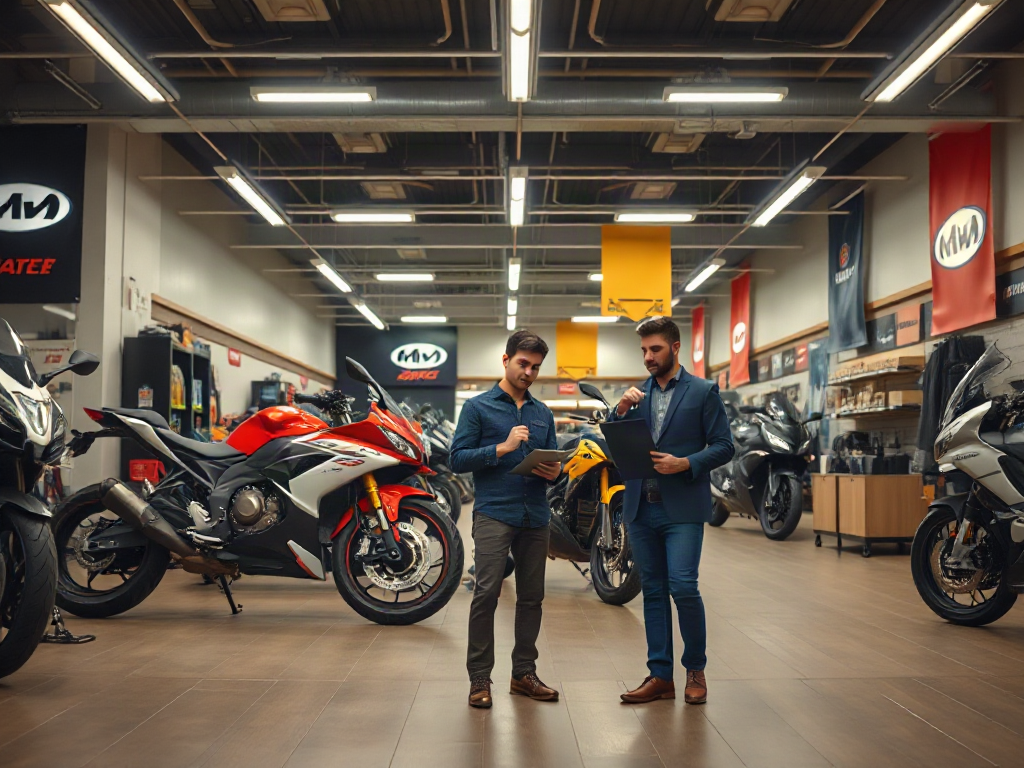
Marketing does not end at the click or the phone call. For a multi-brand dealership, the showroom experience is a marketing channel in itself. A customer lured in by a targeted dirt bike campaign should not walk into a space where the dirt inventory is buried, the staff cannot speak to the product, or the signage contradicts the ad. When the in-store experience does not match the promise of the campaign, the marketing investment is wasted at the moment of highest intent.
A dealership experience audit can reveal these mismatches: how long it takes to greet a customer, whether staff can answer category-specific questions, whether signage and merchandising reflect the breadth of the brands you carry, and whether the path from entry to purchase feels intuitive. The article on why powersports dealership experience audits drive more sales explains how these audits turn customer experience into a measurable marketing advantage for multi-brand stores.
What a Better Multi-Brand Marketing Approach Looks Like
Correcting these mistakes does not require dismantling what already works. It requires a clear architectural change in how marketing is planned, produced, and measured. A stronger approach generally includes:
- A defined dealership brand identity that sits above and unifies all franchise brands.
- Audience segmentation by riding intent and buyer stage, not internal politics.
- Website and content architecture organized around customer journeys.
- A lifecycle marketing program that connects sales, service, and retention.
- Consistent brand voice across every channel and every franchise.
- Community-centered events that honor each riding group separately.
- Local SEO built to win the market, not just the model search.
- Measurement that reports performance by franchise and segment.
- In-store experience aligned with campaign promises.
None of this is about spending more. It is about spending with intention and structure. Multi-brand dealers who get this right often find that their existing budget performs better because it is no longer being diluted across competing internal priorities. It is also worth understanding how single-brand and multi-brand strategies diverge, which our piece on why single-brand motorcycle dealers need a specialized marketing strategy explores from the other side of the aisle.
Questions Dealers Should Ask Before Their Next Campaign
Before committing budget to the next model year launch or seasonal push, multi-brand dealers should pressure-test their plan with a few direct questions:
- What is our dealership's own value proposition, independent of any manufacturer?
- How does each franchise get dedicated exposure without fragmenting our voice?
- Which audience segments are we prioritizing, and what does each one need to hear?
- How will we measure performance by franchise and by segment?
- Does the in-store experience match what our campaigns promise?
If those questions are difficult to answer, the plan is not ready. If they are clear, the plan has a strong foundation. For dealers working through model year transitions, our resource on motorcycle dealership marketing checklist for every model year launch offers a practical structure, and the frequently asked questions page covers many of the concerns multi-brand dealers raise first.
Final Thoughts
Multi-brand dealerships have a genuine competitive advantage: variety, credibility, and the ability to serve more riders under one trusted roof. That advantage only converts into sales when the marketing is designed to support it. The most common mistakes are not failures of effort; they are failures of structure. Dealers fight internal attention battles, neglect their own brand identity, fragment their voice, underinvest in service marketing, and ignore the customer experience on the showroom floor.
Fixing those issues is not a rebrand for the sake of it. It is a practical shift that helps every franchise perform better, keeps customers engaged through the ownership lifecycle, and makes the dealership itself the reason riders come back. The industry is moving quickly, and the standards for customer experience, personalization, and local relevance keep rising. Multi-brand dealers who treat marketing as a coordinated system rather than a collection of franchise obligations will be the ones who dominate their markets.
If you are ready to build a smarter approach for your multi-brand powersports dealership, contact Moto Marketing. Our team works exclusively with motorcycle and powersports dealers across the United States and Canada, helping them increase store traffic, grow service revenue, and keep customers coming back. You can visit us at https://www.motomarketing.biz to learn more, explore our about page to meet the team, review our markets, or book a strategy call today to start the conversation. You can also reach the team directly through the contact page. Let us help your multi-brand dealership stop splitting its marketing and start multiplying its results.