Powersports Dealer Marketing Channels That Drive 2026 Sales
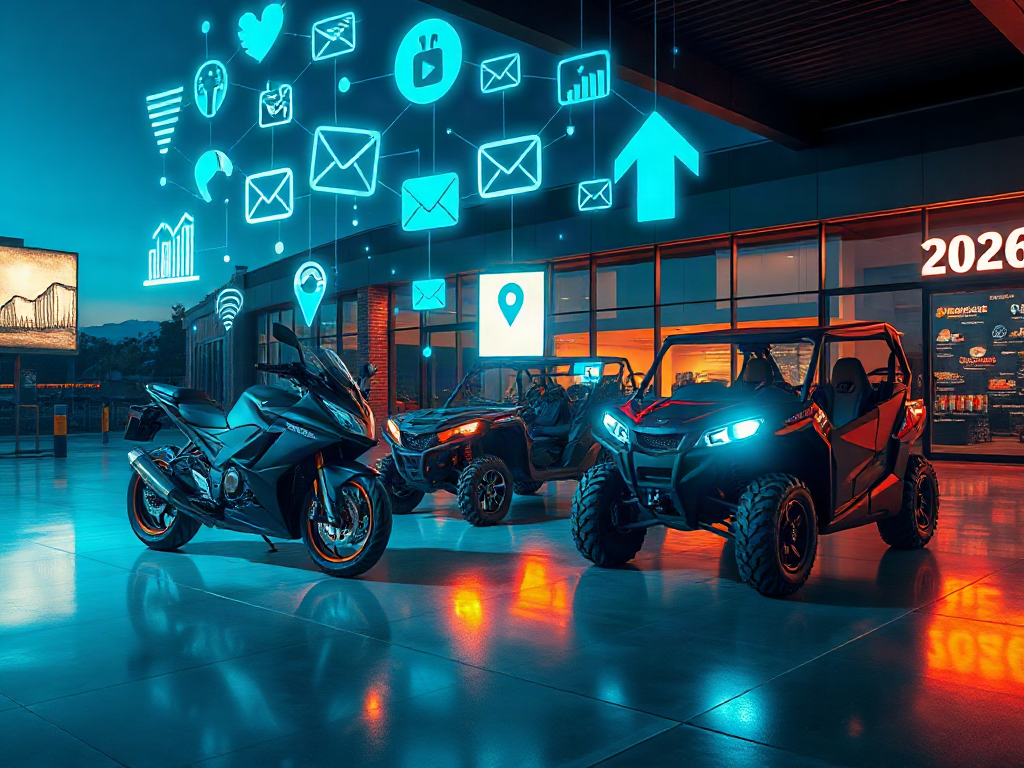
The powersports industry has never been more competitive, and 2026 is shaping up to be a defining year for dealerships across the United States. Riders have more information at their fingertips than ever before, buying journeys begin long before a customer walks through your showroom doors, and the dealerships that win will be the ones that show up consistently across the right channels with the right message. The question is no longer whether to market your dealership — it is which channels deserve your attention, your budget, and your team's energy in the year ahead.
At Moto Marketing, we work exclusively with motorcycle and powersports dealerships, and we have seen firsthand how a coordinated channel strategy separates dealerships that grow from those that plateau. This article breaks down the marketing channels that will drive real sales in 2026, how each one fits into a unified dealership strategy, and what dealer principals and general managers should prioritize.
Why Channel Selection Matters More Than Ever in 2026
The days of spreading a marketing budget thinly across every platform are over. Today's riders — whether they are street bike enthusiasts, dirt bike riders, or ATV and UTV buyers — move through a fragmented media landscape. They research on their phones, watch video reviews, ask questions in owner communities, check inventory online, and expect a fast, personal response when they reach out. A dealership that relies on a single channel, or that treats each channel as a silo, will struggle to capture that attention.
Channel selection matters because it directly affects three things every dealership cares about: store traffic, lead quality, and customer retention. The right mix builds awareness in your local market, nurtures prospects through a long consideration cycle, drives showroom visits, and keeps customers connected to your parts and service departments long after the sale. If you want a deeper look at how these channels fit into a broader plan, our overview of marketing strategy and tactics is a useful starting point.
The Core Channels Driving Powersports Sales in 2026
1. Local Search and Google Business Profile Optimization
When a rider searches for "motorcycle dealer near me" or "ATV dealership open today," local search results are the front door to your store. Google Business Profile remains one of the highest-impact free assets a dealership has, yet many stores treat it as an afterthought. In 2026, local search visibility should be treated as a core sales channel.
- Keep store hours, holiday schedules, and department phone numbers accurate and updated.
- Post weekly updates featuring new inventory, promotions, events, and service specials.
- Encourage satisfied buyers to leave reviews, and respond to every review professionally.
- Use high-quality photos of the showroom, service bays, and team to build trust.
- Ensure each department — sales, service, parts, and finance — is easy to reach from your listing.
Local search performs best when it is part of a coordinated local-authority program. Our local market analysis service helps dealerships understand exactly where they are visible, where competitors are winning, and which neighborhoods and riding communities offer the most growth potential.
2. Search Engine Optimization and Content Marketing
SEO is not a short-term tactic, but it is one of the most durable sales channels a dealership can invest in. Riders research extensively before buying, and the dealerships that publish helpful, model-specific, and locally relevant content earn trust early in the buying journey. Content marketing supports every other channel, from social media to email, by giving your team something valuable to share.
Consider the questions riders actually ask:
- Which bike is right for a first-time street rider?
- What maintenance does a dirt bike need between rides?
- How do you choose between an ATV and a side-by-side?
- What should buyers know before financing a powersports vehicle?
- Which accessories are essential for trail riding in your region?
Answering these questions with well-structured articles, buying guides, and comparison content builds topical authority and brings qualified shoppers to your site month after month. Our content marketing plans are built specifically for dealerships, and our article on building topical authority for ATV and UTV dealerships explains how this compounds over time.
3. Paid Search and Digital Advertising
Paid search and targeted digital advertising give dealerships control over timing and reach. When inventory arrives, when a model-year launch happens, or when a seasonal promotion kicks off, paid channels put your message in front of in-market shoppers immediately. The key in 2026 is precision: geo-targeted campaigns around your market area, audience segments built from real riding interests, and landing pages that match the ad that brought the visitor in.
Paid advertising works best when it is tightly connected to your inventory data, your CRM, and your sales team's follow-up process. A click is not a sale — it is the beginning of a conversation that your dealership needs to be ready to have.
4. Social Media Marketing
Powersports is a visual, passion-driven industry, and social media remains one of the most natural channels for dealerships to build community and drive interest. But in 2026, success on social requires more than posting inventory photos. Riders want to see the lifestyle, the people, and the experiences behind the brand.
- Share customer delivery photos and rider stories with permission.
- Post short-form video of walkarounds, service tips, and event highlights.
- Highlight staff personalities and the dealership's community involvement.
- Use stories and live sessions to answer common buying questions.
- Engage consistently in comments and direct messages — speed matters.
Our social media marketing programs are designed around dealership goals, not vanity metrics, and our guide to leveraging social media to boost dealership presence digs into the tactics that move the needle.
5. Video Marketing
Video has become one of the most trusted formats in the buying journey. Riders want to hear engines, see details up close, and get a feel for a machine before they ever visit a showroom. Dealerships that produce consistent video content — inventory walkarounds, model comparisons, service department explainers, and event recaps — build familiarity and shorten the consideration phase.
Video also powers other channels. Clips can be repurposed for social media, embedded in email campaigns, added to model pages on your website, and used in paid advertising. For a full breakdown, read our article on video marketing strategies for powersports dealerships.
6. Email and SMS Marketing
Your customer database is one of the most valuable assets your dealership owns, and email and SMS marketing turn that database into repeat revenue. Powersports buyers return for service, parts, accessories, gear, and eventually their next vehicle. Staying in front of them with timely, relevant messages keeps your dealership top of mind.
- Send model-year launch announcements to riders who have shown interest in those categories.
- Promote service specials and seasonal maintenance reminders.
- Announce events, demo days, and riding community gatherings.
- Use SMS for time-sensitive updates like appointment reminders and event alerts.
- Segment your list by purchase history, department interest, and riding style.
Our email and SMS marketing services help dealerships build automated journeys that nurture leads and re-engage past customers. Our article on how email and SMS marketing will transform dealerships explains why this channel deserves a permanent place in your plan.
7. Dealership Newsletters
Newsletters occupy a unique space between email marketing and content marketing. They give your dealership a consistent, owned platform to share inventory highlights, department updates, community news, and educational content. A well-run newsletter builds familiarity and keeps your store in the conversation between purchases.
The most effective newsletters are segmented and personal. A street bike rider and a side-by-side owner have different interests, and your newsletter should reflect that. Our dealership newsletters service is built around engagement, and our article on optimizing dealership newsletters offers practical improvements any store can apply.
8. Dealership Events and Community Activation
Events are one of the few marketing channels that generate immediate, in-person sales opportunities while also feeding every digital channel you run. Demo days, ride nights, open houses, charity rides, and rider education clinics bring your community together and create content that fuels social media, email, and video for weeks afterward.
- Host model-specific demo events tied to new inventory arrivals.
- Partner with local riding clubs and organizations for co-hosted rides.
- Run service clinics that introduce riders to your technicians and service department.
- Use events to capture contact information and grow your email and SMS lists.
- Promote events across all channels in the weeks leading up to the date.
Our dealership events support helps stores plan, promote, and follow up on events so the momentum carries into sales. For more ideas, see our article on maximizing revenue with strategic dealership events.
9. Reputation Management and Review Channels
Riders trust other riders. Reviews influence local search rankings, click-through rates, and the decision to visit your store. In 2026, reputation management should be an active, ongoing channel — not a passive hope that happy customers will leave feedback on their own.
- Build review requests into the delivery and service check-out process.
- Train your team to ask for reviews at the right moment.
- Respond to positive and negative feedback with professionalism and speed.
- Showcase reviews on your website and in your marketing materials.
- Track review volume and ratings by department, not just store-wide.
Reputation also connects directly to the in-store experience. Our dealership experience audits help identify friction points in the customer journey that influence what riders say about your store online.
10. Model-Year Launch and Seasonal Campaigns
Powersports runs on cycles. New model-year announcements, seasonal riding patterns, and regional weather all shape when riders are most likely to buy. Dealerships that plan launch campaigns across multiple channels capture demand at its peak, while stores that react late lose ground to competitors.
Launch campaigns should coordinate paid advertising, organic content, email and SMS announcements, social media, events, and in-store signage around the same timeline. Our article on the model-year launch marketing checklist walks through the full sequence, and our guide to model-year launch marketing support explains how each department benefits.
How the Channels Work Together
The biggest mistake dealerships make is treating these channels as separate programs owned by separate people with separate budgets. In 2026, the highest-performing dealerships operate a unified strategy where each channel reinforces the others.
Consider how one piece of content can travel through your entire channel ecosystem:
- A new model arrives, and your team films a walkaround video.
- The video becomes a blog post with specs, photos, and rider-focused insights.
- Clips are published across social media with links back to the model page.
- An email and SMS announcement goes to riders who have shown interest in that category.
- Paid search and digital ads target local shoppers researching that model.
- A demo event is scheduled and promoted across every channel.
- Attendees and leads are added to your CRM and nurtured through follow-up sequences.
- Buyers receive review requests, newsletter invitations, and service reminders after delivery.
This is what a unified channel strategy looks like in practice. Our article on why powersports dealers need a unified marketing strategy explores the operational side of making this work across departments.
Channels by Dealership Type
Different dealership types face different competitive dynamics, and channel emphasis should reflect that.
Street Bike Dealers
Street bike buyers tend to research deeply online before visiting a store. Content marketing, SEO, video walkarounds, and strong local search visibility carry significant weight. Our street bike dealer programs and our article on model-specific content marketing for street bike dealers break down the approach in detail.
Dirt Bike Dealers
Dirt bike riders are often deeply engaged in communities, tracks, and off-road organizations. Community partnerships, events, social media, and video content that speaks to riding culture perform strongly. Explore our dirt bike dealer services and our article on dirt bike dealership marketing strategies.
ATV and UTV Dealers
Utility and recreational buyers often research for months, and content that educates on use cases, towing capacity, terrain suitability, and maintenance builds trust. See our ATV and UTV dealer programs and our article on the ATV and UTV dealer marketing playbook.
Single-Brand and Multi-Brand Dealers
Single-brand dealers benefit from brand-aligned storytelling and community programs, while multi-brand dealers must be especially disciplined about how they present multiple brands without diluting any of them. Our single-brand dealer and multi-brand dealer pages cover both scenarios, and our article on what dealerships get wrong about multi-brand marketing addresses common pitfalls.
Measuring Channel Performance in 2026
Channel selection should be guided by data, not assumptions. Dealerships that measure properly can reallocate budget toward the channels producing real sales and away from channels that generate activity without results.
Key questions to answer for each channel:
- How many qualified leads does this channel produce each month?
- What is the showroom visit rate from leads generated by this channel?
- Which channels contribute to closed sales, including assisted conversions?
- How does each channel contribute to service and parts revenue over time?
- What is the cost per lead and cost per sale by channel?
Attribution is rarely perfect, but consistent tracking builds a clear picture over time. Our article on powersports dealer marketing metrics that matter most covers the numbers worth tracking, and our guide to leveraging data analytics for dealership success explains how to turn numbers into decisions.
Common Channel Strategy Mistakes to Avoid
Even well-intentioned dealerships fall into predictable traps. Watch for these:
- Treating channels as isolated campaigns rather than a connected system.
- Choosing channels based on trends rather than where your customers actually spend time.
- Neglecting follow-up speed, which undermines the value of every lead-generating channel.
- Publishing content without a plan for distribution across email, social, and paid media.
- Ignoring service and parts customers, who represent significant repeat revenue.
- Measuring likes and impressions instead of leads, visits, and sales.
Our article on what powersports dealerships get wrong explores several of these issues in more depth, and our FAQ addresses questions dealers ask most often.
Building a 2026 Channel Plan That Fits Your Dealership
No two dealerships have identical markets, inventory mixes, or customer bases, which is why a channel plan should be built around your specific situation. A practical approach looks like this:
- Audit your current visibility in local search and identify gaps.
- Review your content library and determine which models and categories need coverage.
- Assess your email and SMS list health, segmentation, and automation.
- Evaluate your social media consistency and engagement quality.
- Confirm your event calendar aligns with inventory arrivals and riding seasons.
- Review your review volume and response practices by department.
- Set monthly targets for leads, showroom visits, and sales by channel.
- Build a reporting rhythm so the plan adjusts based on results.
Dealerships that want a structured starting point can book a strategy call to walk through priorities for the year ahead. Our marketing trends article and our strategies that drive sales guide offer additional context on where the industry is heading.
Frequently Asked Questions
Which channel should a dealership prioritize first?
Most dealerships should start with local search visibility and a healthy customer database, because those assets support every other channel. From there, content marketing, email and SMS, and social media build a strong foundation before layering in paid advertising and events.
How long does it take for content marketing to produce results?
Content marketing typically builds momentum over several months as search visibility grows and your library expands. The compounding effect is significant, which is why dealerships that start early gain a durable advantage over time.
Can channels be run by different team members?
Yes, but coordination matters. When different departments own different channels, a shared content calendar, consistent messaging, and clear reporting keep the strategy unified rather than fragmented.
How do events support digital channels?
Events generate photos, videos, testimonials, and community stories that feed social media, email, video, and content marketing for weeks. They also produce direct sales conversations and grow your contact lists.
What is the role of reputation management in the channel mix?
Reviews influence local search rankings, click-through rates, and purchase decisions. Actively requesting and responding to reviews strengthens every other channel by reinforcing trust at the moment a rider decides where to shop.
Final Thoughts
The channels that drive powersports sales in 2026 are not mysterious — they are the channels where riders already spend their time, organized into a coherent strategy that connects awareness to showroom visits to long-term loyalty. Dealerships that invest in local search, content, video, email and SMS, social media, newsletters, events, and reputation management — and measure them together — will outperform stores that treat marketing as a series of disconnected tactics.
If your dealership is ready to build a channel strategy that drives real 2026 sales, the team at Moto Marketing is here to help. We work exclusively with motorcycle and powersports dealerships across the United States and Canada, and we would welcome the chance to talk through your goals. Visit https://www.motomarketing.biz to explore our services, browse the blog for more dealer-focused insights, or contact us today to start the conversation. You can also book a strategy call and take the first step toward a marketing plan built for the year ahead.